When IT Opens the Closet: True Stories of Improvised Data Storage and How to Shut Them Down
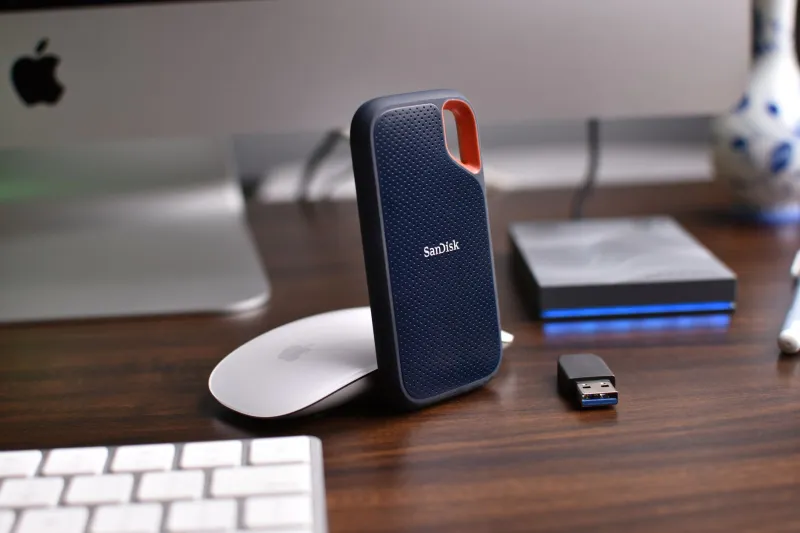
Every organization has a server closet, and every server closet has its secrets. Ask a group of IT professionals about the most alarming improvised storage practice they have ever discovered, and the room does not go quiet — it gets competitive. The stories are funny in the retelling and terrifying in the implications: customer records on a thumb drive labeled "DO NOT LOSE," a production export sitting in an employee's personal Dropbox, an external hard drive duct-taped to the underside of a desk.
These are not tales from poorly run companies. They come from competent, well-funded organizations where a well-meaning employee simply needed to move data faster than policy allowed. Understanding how shadow storage happens — and why smart people create it — is the first step toward eliminating it.
The Labeled USB Drive Problem
The most common discovery in any storage audit is the personal external drive. A database administrator pulls a backup before a risky migration, copies it to a drive purchased at a local office supply store, and keeps it "just in case." The drive then outlives the project, the employee, and often the company's memory of the incident.
The teachable moment here is not about scolding the administrator. The improvised backup existed because the official process felt slower than the risk justified. When legitimate recovery tooling is cumbersome, someone will build a faster path — and that path will lack encryption, retention controls, and any record of its existence.
The fix: Make the compliant path the fastest path. Automated, encrypted backup targets with self-service restore options remove the incentive to reach for the desk drawer.
Personal Cloud Accounts and the Compliance Gap
A recurring story in IT circles involves finding company data in consumer file-sharing accounts. A sales team needs to share a large export with a partner, corporate storage hits a quota, and someone uploads the file to a personal account. Months later, that file is synced to a laptop that gets stolen from an airport, or it lingers in an account belonging to an employee who left two years ago.
For organizations subject to HIPAA, state breach-notification laws, or contractual data-handling requirements, this is not a minor lapse. A single personal-account sync can trigger obligations the company never knowingly accepted.
The fix: Deploy an enterprise file-sharing platform with sufficient quotas and easy external collaboration, then use data loss prevention tooling to detect and block transfers to unmanaged accounts. If the sanctioned tool is easier than the unsanctioned one, behavior follows.
The Departed Employee's Hard Drive
Perhaps the most unsettling category of story: data discovered on hardware belonging to someone who is no longer with the company. A workstation retired to a storage room still holds an unencrypted copy of the customer database. A former contractor's laptop, returned but never wiped, sits in a closet for three years.
These devices represent a compound risk — physical exposure, missed encryption, and no chain of custody — and they persist precisely because nobody is assigned to deal with them.
The fix: Tie hardware disposition to offboarding checklists with named owners and deadlines. Any device that has touched production data should pass through a documented wipe-and-log process before it leaves a controlled space.
Why Audits Find What Policies Miss
Most organizations already have policies prohibiting exactly these practices. The policies fail because they are written for the compliant and ignored by the hurried. Discovery requires active verification: enumerate cloud application usage through your SSO provider, scan the network for attached storage, review egress logs for large outbound transfers, and physically inventory the spaces where hardware accumulates.
The goal of these audits should not be punishment. Teams that fear consequences will simply hide their workarounds better, and hidden workarounds are precisely the problem. Frame discovery as an opportunity to fix the underlying friction that produced the workaround in the first place.
Building a Storage Culture That Outlasts the Audit
Eliminating shadow storage is ultimately a design problem, not a compliance problem. Three principles consistently separate organizations that solve it from those that rediscover it annually:
- Convenience beats policy. Every sanctioned tool must be easier than the workaround it replaces.
- Visibility beats assumption. You cannot govern storage you cannot see; continuous discovery tooling is now table stakes.
- Ownership beats committees. Every dataset and every device needs a named custodian, and offboarding must include data disposition, not just account deactivation.
The USB drive in the server closet is a symptom, not a villain. Treat the conditions that created it, and the horror stories stop writing themselves.