Open-Source Databases vs. Enterprise Giants: A Practical Cost-Benefit Guide for 2024
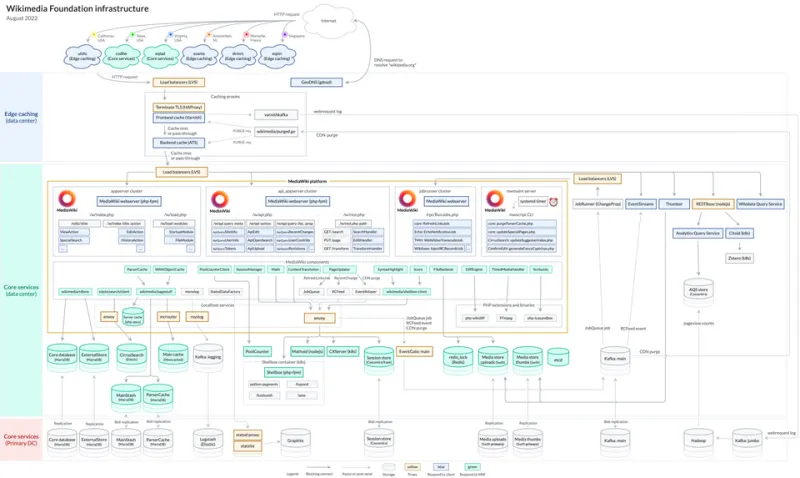
Photo: Timo Tijhof, CC0, via Wikimedia Commons
Database licensing is one of the most significant and least scrutinized line items in enterprise IT budgets. For many mid-sized American businesses, annual fees paid to Oracle, Microsoft, or IBM for database software represent hundreds of thousands of dollars — expenditures that renew automatically, scale with processor counts or user volumes, and rarely receive the strategic review they deserve.
The open-source database ecosystem has changed that calculus substantially. Platforms that once carried the stigma of limited support and enterprise-incompatible feature sets have matured into production-grade solutions trusted by some of the largest technology organizations in the world. For decision-makers evaluating database strategy in 2024, the question is no longer whether open-source alternatives are viable — it is whether your organization's specific requirements justify the premium of proprietary licensing.
The Licensing Cost Baseline: What Enterprises Are Actually Paying
Before comparing platforms, it is useful to establish what proprietary database licensing actually costs at scale. Oracle Database Enterprise Edition is commonly licensed per processor core, with list prices that can reach $25,000 per core before support contracts are applied. A modestly sized deployment across four physical servers with modern multi-core processors can generate annual licensing and support costs exceeding $500,000.
Microsoft SQL Server Enterprise Edition operates on a similar per-core model, with list prices around $15,000 per core. While Microsoft's licensing structure is generally considered more accessible than Oracle's, a production SQL Server environment supporting a mid-market enterprise can still generate $150,000 to $300,000 in annual costs when support, software assurance, and infrastructure are included.
These figures are not exceptional. They represent standard deployments at organizations that have not revisited their database strategy in several years — a common situation in industries where database infrastructure is treated as a stable, unchanging utility rather than an active cost management opportunity.
PostgreSQL: The Enterprise-Grade Alternative That's Hard to Ignore
PostgreSQL has become the default recommendation for organizations seeking a relational database that can handle enterprise workloads without proprietary licensing costs. Its feature set — including full ACID compliance, advanced indexing, JSON support, robust stored procedure capabilities, and extensive extension libraries — addresses the majority of use cases that historically required Oracle or SQL Server.
The platform is actively maintained by a global development community and benefits from commercial support offerings through vendors such as EDB (EnterpriseDB), which provides Oracle-compatible migration tooling and enterprise support contracts. For organizations concerned about the absence of a single vendor accountability structure, these commercial support options provide a meaningful bridge.
Best suited for: Transactional applications, analytics workloads, geospatial data (via PostGIS), and organizations migrating from Oracle seeking functional parity at lower cost.
Realistic savings: A mid-market manufacturing company in Ohio that migrated from Oracle Database Enterprise Edition to PostgreSQL in 2023, supported by an EDB enterprise support contract, reported first-year net savings of approximately $380,000 after accounting for migration labor, staff training, and ongoing support fees.
Key consideration: PostgreSQL migration from Oracle requires attention to syntax differences, proprietary Oracle features (such as specific PL/SQL constructs), and application-layer query compatibility. Migration assessment tools can identify compatibility gaps early, but budget for a remediation period.
MongoDB: When Document Storage Fits the Problem
MongoDB occupies a different architectural space than relational databases, making direct comparisons with Oracle or SQL Server context-dependent. For organizations managing semi-structured or rapidly evolving data — content management systems, customer profile stores, product catalogs, IoT event streams — MongoDB's document model frequently outperforms relational alternatives in both developer productivity and query performance.
The open-source MongoDB Community Edition is available at no licensing cost. MongoDB Atlas, the managed cloud service, operates on a consumption model that many organizations find more predictable and cost-efficient than enterprise relational licensing, particularly for workloads with variable demand.
Best suited for: Applications with flexible or schema-less data requirements, high-velocity write workloads, and development teams that prioritize iteration speed.
Realistic savings: A Dallas-based digital media company that replaced a Microsoft SQL Server deployment used for content and user data storage with MongoDB Community Edition reported annual licensing savings of $210,000. The transition required a data model redesign but reduced query complexity for their primary application significantly.
Key consideration: MongoDB is not a universal Oracle or SQL Server replacement. Organizations with complex relational data models, heavy JOIN dependencies, or strict transactional requirements across multiple collections should evaluate PostgreSQL before MongoDB.
MariaDB: The MySQL-Compatible Path Forward
MariaDB emerged as a community-driven fork of MySQL following Oracle's acquisition of Sun Microsystems, and it has since developed into a distinct platform with its own feature roadmap. For organizations currently running MySQL — or those seeking a relational database with broad compatibility and a straightforward operational model — MariaDB offers a compelling option.
MariaDB Corporation provides commercial support and enterprise features, including columnar storage for analytics workloads (via MariaDB ColumnStore) and compatibility with MySQL tooling and drivers. The platform is widely deployed across US web infrastructure and is supported by major cloud providers as a managed service.
Best suited for: Web applications, SaaS platforms, and organizations already operating MySQL environments seeking a more actively developed alternative with commercial support options.
Realistic savings: Licensing savings relative to Oracle or SQL Server Enterprise are comparable to PostgreSQL. Organizations migrating from MySQL to MariaDB primarily benefit from improved feature access and community support rather than direct licensing cost reduction.
Security Considerations Across Open-Source Platforms
A persistent concern among IT security teams evaluating open-source databases is the question of vulnerability disclosure and patch cadence. Proprietary vendors offer formal security bulletins and defined patch release schedules, which can simplify compliance documentation.
Mature open-source platforms address this through transparent vulnerability disclosure processes and active security maintenance. PostgreSQL, MongoDB, and MariaDB all maintain public security advisories and release patch versions on defined schedules. For organizations in regulated industries, commercial support contracts from vendors such as EDB, MongoDB Inc., or MariaDB Corporation provide the formal support structure that compliance auditors typically require.
Database encryption at rest, role-based access control, audit logging, and TLS enforcement are all natively supported across these platforms. In several respects — particularly around community scrutiny of the codebase — open-source security models offer transparency advantages that closed-source alternatives cannot match.
The Hidden Costs of Open-Source Adoption
A balanced evaluation requires acknowledging that open-source database adoption carries its own cost categories. Internal expertise requirements are real: PostgreSQL administration, MongoDB performance tuning, and MariaDB replication configuration are specialized skills that may require hiring, training, or contractor engagement.
Migration from proprietary platforms involves labor costs for data transformation, application query refactoring, and testing. Organizations should budget $50,000 to $150,000 for a mid-complexity migration project, depending on database size, application dependency scope, and internal resource availability.
Commercial support contracts, while significantly less expensive than proprietary licensing, are a recurring cost that must be included in total cost of ownership calculations. A comprehensive EDB enterprise support contract for PostgreSQL, for example, may cost $30,000 to $80,000 annually — meaningful, but typically a fraction of equivalent Oracle support fees.
Making the Decision: A Framework for IT Leaders
The decision to migrate from an enterprise proprietary database to an open-source alternative should be driven by three questions:
-
Do your workloads require features exclusive to your current vendor? Conduct a feature dependency audit. Many organizations discover they use a small subset of the capabilities they are paying to license.
-
Does your team have the capacity to develop or acquire open-source administration expertise? If not, factor in the cost of commercial support or managed cloud services.
-
Is your application architecture compatible with migration? Assess query compatibility, stored procedure dependencies, and integration touchpoints before committing to a timeline.
For the majority of mid-market organizations in the United States, the answer to all three questions supports at least a partial migration to open-source infrastructure. The platforms are mature, the support ecosystems are robust, and the financial case — often exceeding $200,000 in annual savings — is increasingly difficult to set aside.
The enterprise database market is not going away, and proprietary platforms retain advantages in specific high-complexity scenarios. But in 2024, the default assumption that enterprise licensing is the only responsible choice no longer reflects the reality of what open-source platforms can deliver.