Version Control for Humans: Auditing the Shared Drive Before It Becomes a Liability
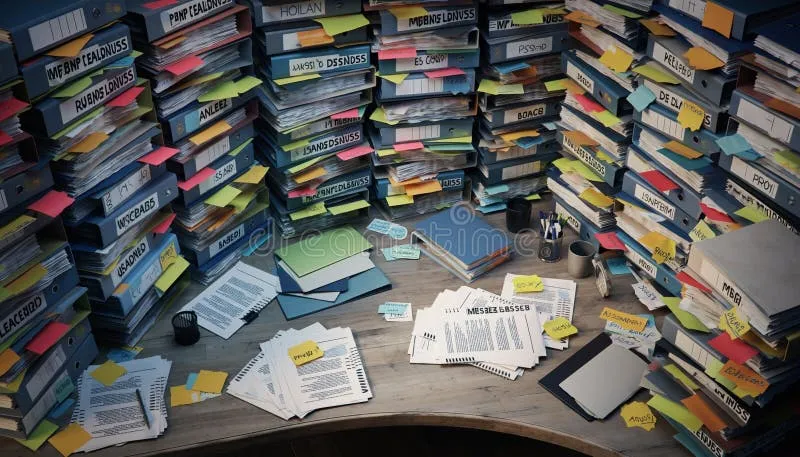
Photo: cluttered computer folders file management office desk, via thumbs.dreamstime.com
Somewhere in your organization right now sits a folder named "FINAL_v2_ACTUAL" — or perhaps "Marketing_FINAL_final_USE_THIS." Nobody remembers creating it. Nobody is brave enough to delete it. And every month, your cloud storage bill quietly carries its weight alongside thousands of files just like it.
This is not merely a housekeeping nuisance. For US businesses, an unmanaged shared drive is a slow-motion operational and financial problem: it inflates storage spend, obscures institutional knowledge, and — most dangerously — creates serious exposure during litigation and regulatory requests. The good news is that the fix requires no new software purchase. It requires an audit, a governance framework, and the organizational will to follow through.
The True Cost of Organized Chaos
The financial dimension is the easiest to quantify. Cloud storage is priced per gigabyte, and duplicated files — the same proposal saved to three departments, the same deck exported five times — multiply your footprint without adding value. Analysts who run storage audits at mid-sized companies routinely find that 30 to 50 percent of stored data is redundant, obsolete, or trivial (the "ROT" classification used across the industry). Paying to sync, back up, and secure files nobody will ever open again is a quiet budget leak that compounds annually.
The operational cost is subtler but larger. When an employee cannot tell which version of a contract is authoritative, they either guess or ask a colleague — and both outcomes burn time and introduce risk. Teams build shadow workarounds: personal drives, email attachments, USB sticks. Your single source of truth fragments into a dozen unofficial ones.
The Legal Discovery Nightmare
Here is where the issue stops being funny. In American civil litigation, the discovery process obligates companies to produce relevant electronically stored information. A chaotic file environment turns that obligation into an expensive scavenger hunt. If your legal team cannot confidently identify where responsive documents live, outside counsel will bill hours searching — and a missed document can trigger sanctions or adverse inference rulings.
Poor version hygiene also undermines your own position. When five near-identical copies of a document exist with no clear lineage, opposing counsel can cherry-pick whichever draft is most damaging. A disciplined file environment, by contrast, produces a clean, defensible record.
A Five-Step Framework for Taming the Drive
1. Inventory before you act. Use your platform's built-in reporting — SharePoint, Google Drive, Box, and Dropbox all offer admin analytics — to catalog volume by department, folder age, and last-modified dates. You cannot govern what you have not measured.
2. Classify with the ROT test. Flag content as Redundant (duplicates), Obsolete (superseded drafts, closed projects), or Trivial (personal downloads, temp files). Apply a conservative standard: when in doubt, archive rather than delete.
3. Assign ownership to every top-level folder. Chaos thrives where no one is accountable. Each departmental folder needs a named steward responsible for quarterly reviews and retention decisions.
4. Standardize naming conventions — gently. Mandate only the essentials: date format (YYYY-MM-DD), project codes, and a single indicator for the authoritative version. Overly rigid schemes fail; minimal, enforced ones stick.
5. Automate retention where possible. Configure lifecycle policies that flag untouched files after a set period and route them to cold storage or a legal-hold review queue rather than leaving them in active, fully-replicated tiers.
Making It Stick
The audit is the easy half. The durable fix is cultural: leadership must model the convention, onboarding must teach it, and quarterly cleanup should be a calendar item, not a aspiration. Consider a small annual "storage amnesty day" where teams resolve flagged files without blame.
Your shared drive should function like infrastructure — invisible, reliable, and cheap to maintain. Every week it goes unaudited, the FINAL_v2 folder grows. Start with the inventory this quarter; your budget, your legal team, and your future selves will all benefit.