Trapped in the Cloud: How Data Gravity Is Quietly Draining Enterprise Budgets

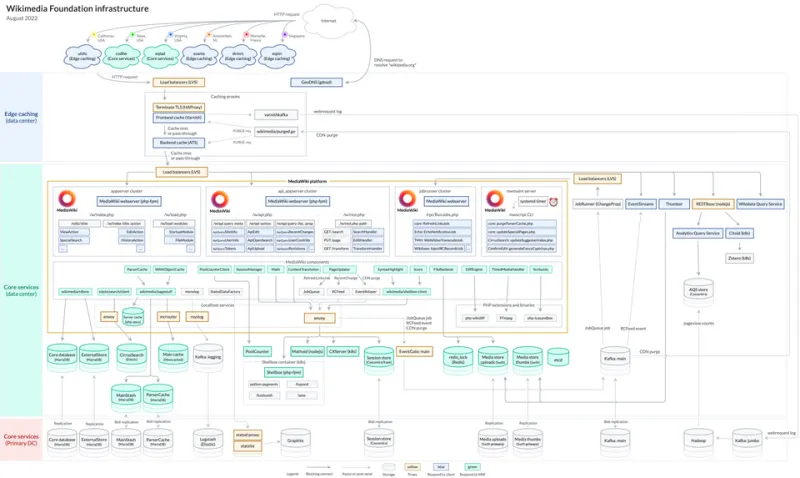
Photo: Lapalmauz, CC BY-SA 4.0, via Wikimedia Commons
When a mid-sized logistics firm in Atlanta migrated its core operations to a major cloud provider five years ago, the decision seemed straightforward. Competitive pricing, robust tooling, and a compelling support contract made the move look like a textbook win. Fast forward to today, and that same firm is paying millions annually in egress fees alone — not because of poor planning, but because of a force that very few IT teams account for during initial cloud strategy discussions: data gravity.
Data gravity is not a marketing term. It is a measurable operational reality. As datasets grow in volume, the services, applications, and workflows built around them become increasingly difficult — and expensive — to relocate. Much like a planet accumulating mass and pulling nearby objects into its orbit, large data repositories attract dependencies. The bigger the data, the stronger the pull, and the more costly any attempt at migration becomes.
Understanding the Mechanics of Data Gravity
At its core, data gravity emerges from three compounding factors: volume, velocity, and coupling.
Volume is the most obvious driver. A petabyte-scale data warehouse does not move the way a 50 GB database does. Cloud providers charge egress fees — costs associated with transferring data out of their environment — that can range from $0.08 to $0.09 per gigabyte on major platforms. At scale, those fees do not stay modest for long. A company moving 500 terabytes across providers could face a transfer bill exceeding $40,000 before accounting for downtime, re-engineering, or service disruption.
Velocity compounds the problem. Businesses generating high-throughput transactional or streaming data are constantly adding to the mass of their primary data stores. By the time an organization recognizes it is locked into a suboptimal arrangement, the dataset has grown substantially larger than when the original decision was made.
Coupling is perhaps the most insidious factor. Once a data store becomes the nucleus of an ecosystem — feeding analytics pipelines, machine learning models, operational dashboards, and third-party integrations — every adjacent service becomes a gravitational dependency. Moving the data means re-architecting the entire system, not just lifting files from one storage bucket to another.
Real-World Consequences: When Multi-Cloud Becomes a Liability
The concept of multi-cloud architecture is frequently promoted as the antidote to vendor lock-in. In theory, distributing workloads across two or more providers offers negotiating leverage, redundancy, and flexibility. In practice, many organizations discover that their multi-cloud deployments have created fragmented data estates with significant gravity problems on each platform.
Consider a financial services company operating across both a hyperscaler and a secondary cloud provider for regulatory redundancy. If the primary analytics environment lives on one platform and the compliance reporting tools were built natively on another, the organization faces a constant data movement tax. Replicating or transferring data between environments to satisfy both operational and regulatory requirements generates ongoing egress costs that were never modeled into the original business case.
A 2023 survey by a leading enterprise research firm found that nearly 60 percent of US organizations operating multi-cloud strategies reported unexpected data transfer costs as a significant budget concern — with many citing annual overruns in the hundreds of thousands of dollars. For larger enterprises, that figure climbs into the millions.
Diagnosing Your Organization's Gravity Risk
Before an IT leader can address data gravity, they need to assess the severity of the problem within their existing architecture. The following framework provides a starting point.
Inventory your data concentrations. Identify where your largest datasets live and which services depend on them. Any data store exceeding 10 terabytes that has more than three downstream dependencies should be flagged as a potential gravity anchor.
Audit egress patterns over the past 12 months. Most cloud providers offer cost explorer tools that break down spending by service category. If data transfer fees represent more than 8 to 10 percent of your total cloud spend, your architecture has a gravity problem worth addressing.
Map application-to-data proximity. Applications that process data remotely — pulling large datasets across cloud regions or across provider boundaries — are incurring both cost and latency penalties. Documenting these patterns reveals where gravity is generating friction.
Evaluate contractual flexibility. Some organizations discover that their service agreements include committed use discounts or reserved capacity that further entrenches them on a single platform. Understanding these contractual dimensions is essential before making architectural decisions.
Practical Strategies for Reducing Gravity Lock-In
There is no single solution to data gravity, but a combination of architectural and procurement strategies can significantly reduce its financial impact.
Design for data locality from the start. The most effective mitigation is preventative. When building new workloads, co-locate compute and storage within the same cloud region and provider. Avoid architectures that require cross-provider data movement as part of routine operations.
Adopt a data mesh or federated approach selectively. Rather than centralizing all data in a single massive store, some organizations benefit from distributing domain-specific datasets closer to the teams and applications that consume them. This reduces the concentration of gravity in any one location, though it introduces governance complexity that must be managed carefully.
Leverage cloud-agnostic data formats and open standards. Storing data in proprietary formats increases switching costs. Formats such as Apache Parquet, Delta Lake, or open table formats like Apache Iceberg allow data to be read and processed across environments without full migration.
Negotiate egress fee structures proactively. Many enterprises do not realize that egress pricing is negotiable at enterprise contract levels. Organizations with significant data volumes should engage their cloud account teams directly about egress credits, waived fees for specific use cases, or custom transfer arrangements.
Reconsider whether true multi-cloud is right for your model. For some business models — particularly those with highly centralized data requirements and limited cross-provider dependencies — a well-optimized single-cloud strategy with a secondary provider for disaster recovery may be more cost-effective than a fully distributed multi-cloud architecture.
Asking the Right Question
Data gravity does not make multi-cloud wrong. It makes poorly planned multi-cloud expensive. The organizations that manage this challenge most effectively are those that treat data placement as a first-class architectural decision — not an afterthought addressed after services are already running.
For IT leaders evaluating or revisiting their cloud strategy, the central question is not which cloud provider offers the best individual service. The more important question is: where does our data need to live, and what does it cost to keep it moving? Answering that question honestly, with full visibility into egress patterns and dependency maps, is the foundation of a cloud strategy that delivers on its financial promises rather than quietly eroding them.
Data gravity is real. The enterprises that acknowledge it early will spend their cloud budgets on innovation. Those that ignore it will spend them on transfer fees.