Designing Your Way Out: How to Build Cloud Architecture That Keeps Vendors Honest

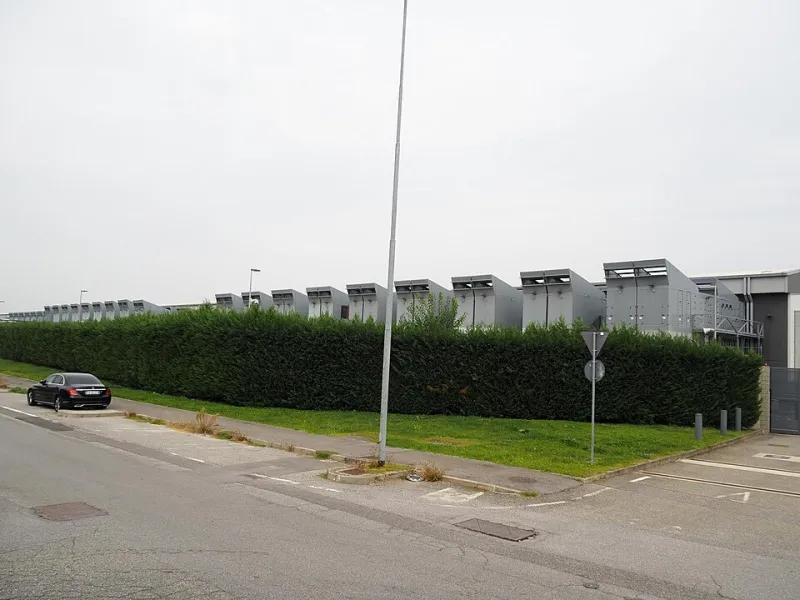
Photo: 4300streetcar, CC BY 4.0, via Wikimedia Commons
The conversation about cloud vendor lock-in tends to happen in one of two contexts. The first is a strategic planning session, where the topic is raised, acknowledged as a concern, and then set aside in favor of more immediate priorities. The second is a contract renewal negotiation, where the organization discovers — usually too late — that the leverage it assumed it had does not actually exist.
This is not a theoretical problem. Enterprises across the United States have found themselves in situations where migrating away from a cloud provider would require months of re-engineering, significant data transfer costs, and the retirement of integrations built around proprietary services. At that point, the vendor knows the math as well as the customer does. The renewal terms reflect it.
The solution is not to avoid cloud platforms. The depth and breadth of services offered by major providers represent genuine business value, and no serious organization should forgo them out of abstract principle. The solution is to make deliberate architectural choices — from the earliest stages of cloud adoption — that preserve optionality without sacrificing capability.
Understanding What Lock-In Actually Means
Lock-in is not a single condition. It is a spectrum of dependency that accumulates across multiple dimensions simultaneously.
At the data layer, lock-in manifests as proprietary storage formats, egress fees that make large-scale data extraction prohibitively expensive, and database services that do not expose standard interfaces. An organization that has stored petabytes of data in a vendor-specific format faces a migration challenge that is fundamentally different from one that stores the same volume in open, portable formats.
At the service layer, lock-in appears when application logic becomes tightly coupled to platform-specific capabilities — vendor-managed queuing services, proprietary machine learning pipelines, or serverless execution environments with non-standard runtime behaviors. Each of these services may deliver real value, but each integration deepens the dependency.
At the contractual layer, lock-in is codified in volume commitment discounts, multi-year reserved capacity agreements, and data residency terms that restrict where information can be moved. Many organizations sign these agreements without fully modeling the exit cost embedded in them.
The Architectural Principles That Preserve Portability
Building for vendor independence does not mean building for the lowest common denominator. It means making deliberate choices about which vendor-specific services are worth the dependency they create, and ensuring that the core of your data architecture remains portable.
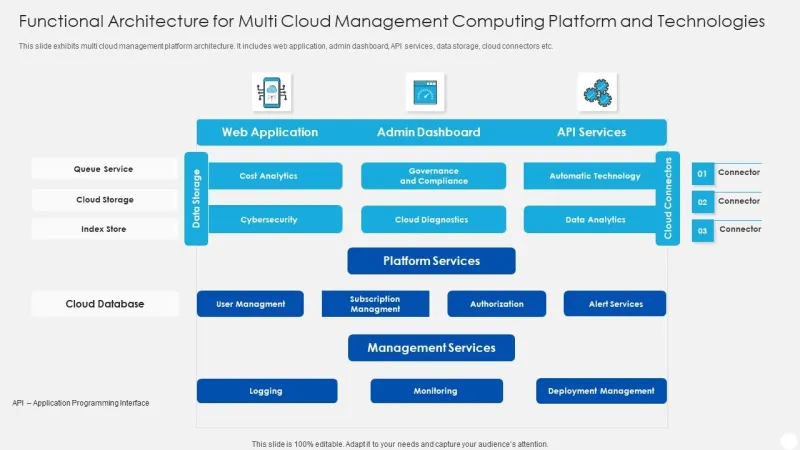
The most durable principle is to treat your data as a first-class asset that exists independently of the platform hosting it. This means storing data in open formats — Parquet, Avro, CSV, or standard relational schemas — wherever possible. It means maintaining your own data catalog rather than relying exclusively on a vendor-managed metadata service. And it means ensuring that the interfaces your applications use to access data are abstracted from the underlying storage platform.
Abstraction layers are the practical mechanism through which this principle is implemented. When application code interacts with a storage abstraction rather than a vendor SDK directly, the underlying platform can be swapped with changes confined to the abstraction layer rather than propagated throughout the codebase. This is a well-established software engineering pattern, but it is applied inconsistently in cloud architecture, particularly when teams are moving quickly under delivery pressure.
Containerization and orchestration frameworks — specifically Kubernetes, which runs across all major cloud providers and on-premises infrastructure — provide a comparable abstraction at the compute layer. Organizations that have containerized their workloads retain meaningful portability even when those containers are currently running on a single provider's managed Kubernetes service.
Reading the Contract Before You Sign the Architecture
Technical portability is necessary but not sufficient. The contractual terms governing your cloud relationship can constrain migration regardless of how well your architecture is designed.
Several clauses warrant particular scrutiny. Data egress pricing is the most widely discussed, but the structure matters as much as the rate. Some providers offer tiered egress pricing that becomes increasingly punitive at the volumes associated with a full migration. Others include provisions that waive egress fees under specific conditions — notably, when data is being transferred to a competing platform — but these provisions are not always prominently disclosed.
Data residency and sovereignty clauses can restrict the geographic movement of data in ways that complicate migration timelines. If your data is contractually required to remain within a specific region, and your target platform does not have equivalent infrastructure in that region, the migration is blocked regardless of technical readiness.
Notice periods and termination fees in enterprise agreements deserve equally careful review. A ninety-day termination notice requirement may seem reasonable in isolation, but when combined with a migration timeline measured in months, it creates a window during which the organization is paying for both the old environment and the new one simultaneously.
Legal counsel with specific experience in technology contracts is not a luxury in this context. It is a practical requirement for any organization making multi-year commitments to cloud infrastructure.
Negotiating from a Position of Demonstrated Alternatives
The organizations that achieve the most favorable cloud terms are not necessarily the largest spenders. They are the ones that can credibly demonstrate they have alternatives. A vendor negotiating with a customer whose architecture is fully portable and whose team has already validated a migration path to a competing platform is negotiating in a different environment than one dealing with a customer whose exit would require eighteen months of re-engineering.
This is the strategic value of exit planning that most discussions underemphasize. The primary benefit of building a portable architecture is not that you will migrate — it is that the credible ability to migrate changes the terms under which you stay.
Multi-cloud architectures, even partial ones, reinforce this position. Running non-critical workloads on a secondary provider, maintaining validated data pipelines that span providers, or periodically testing restoration of data to an alternative environment all serve as operational proof that the exit path is real rather than theoretical.
Making Portability an Ongoing Practice
Exit strategy is not a document produced once and filed away. It is an operational discipline that requires periodic review as your infrastructure evolves. New services adopted on a cloud platform should be evaluated for their portability implications before integration, not after. Contract renewals should trigger a reassessment of whether the current architecture still supports a credible alternative.
Organizations that treat vendor independence as a living architectural principle — rather than a one-time project — consistently find themselves in stronger negotiating positions and with greater operational resilience. The cloud remains one of the most powerful tools available to modern businesses. The goal is to use it on terms that reflect that value, rather than terms dictated by the difficulty of leaving.